Why Indian Brands Are Choosing Cricket Underdogs Over Superstars
India doesn’t just love cricket it’s obsessed with it. For decades, that obsession has translated into a predictable marketing playbook: get Virat Kohli to hold your product, or sponsor Team India and watch the money roll in. The bigger the star, the bigger the budget, the bigger the impact. Or so the theory went.
But something curious is happening at the 2026 T20 World Cup. While most brands are locked in a bidding war for the usual suspects, a few sharp-thinking marketers have flipped the script entirely. They’re backing cricket’s underdogs teams nobody expects to win, from countries where they don’t even operate. And it’s working brilliantly.
When Doing Nothing Became a Marketing Strategy
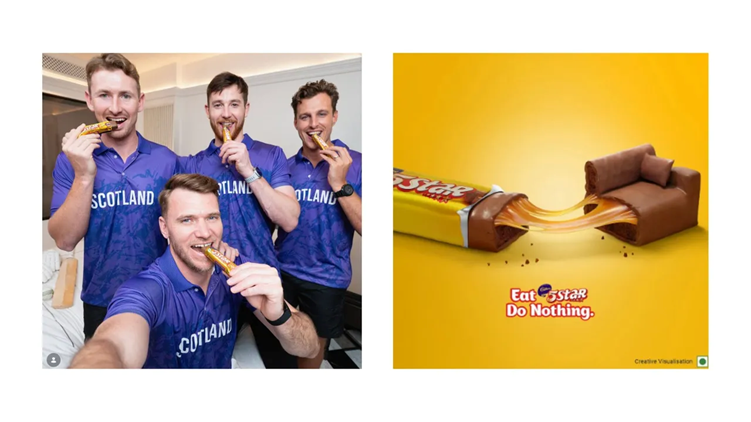
Picture this: Scotland’s cricket team lands in India for the T20 World Cup. They’re not exactly favourites they qualified as last-minute replacements when Bangladesh withdrew over security concerns. Most teams would arrive under pressure, desperate to prove themselves. Scotland arrived eating chocolate bars.
Their Instagram post said it all: players munching on Cadbury 5 Star with the caption “Glad to have made it to India. Eat 5 Star. Do Nothing.”
For those unfamiliar with 5 Star’s advertising history, this hit differently. The chocolate brand has spent years building its identity around a counter-cultural “Do Nothing” philosophy a deliberate rejection of hustle culture and constant achievement. They’ve created campaigns featuring third umpires (who literally do-nothing during cricket matches), time machines to skip Valentine’s Day pressure, and even redesigned their logo to look like five-star rating symbols on apps.
Scotland’s arrival wasn’t just opportunistic it was perfect brand alignment. Here’s a team that didn’t grind through qualifiers or battle for their spot. They simply showed up when called. The partnership felt less like a sponsorship and more like a philosophical statement wrapped in caramel and chocolate.
The genius lies in the context. In a tournament where every other brand is screaming about performance, pressure, and glory, 5 Star positioned itself as the anti-pressure voice. The message to young Indian consumers? Sometimes showing up is enough. Sometimes you don’t need to prove anything.
The ₹40 Crore Question Nobody Saw Coming
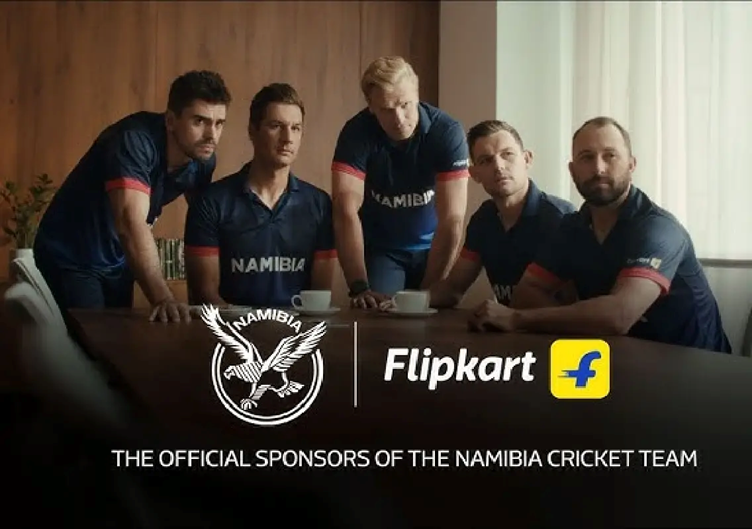
If Scotland’s partnership raised eyebrows, Flipkart’s move made jaws drop.
When India’s homegrown e-commerce giant announced it would sponsor Namibia’s cricket team for the T20 World Cup, the internet had questions. Lots of them. Why Namibia? Flipkart doesn’t even operate there. Shouldn’t they sponsor India? Or at least a team with a realistic shot at the trophy?
The online debate was fierce, confused, and exactly what Flipkart wanted.
Then came the campaign film. Created by Leo India, it leaned into the absurdity with Flipkart’s signature self-aware humour. The ad featured Namibian players pointing out the obvious irony why would an Indian company sponsor a team from a country where it has no business?
The answer was marketing brilliance dressed as common sense.
Namibia plays in Group A. So do India and Pakistan. Same matches, same broadcast slots, same massive viewership across India. The Flipkart logo on Namibia’s jersey gets the same screen time as it would on India’s just without the astronomical price tag. Industry sources estimate the deal at around ₹40 crore, a fraction of what sponsoring India would cost.
As Pratik Shetty, Flipkart’s Head of Growth and Marketing, explained it: the partnership offered “comparable viewership, identical logo visibility, and broadcast exposure during India’s matches” at significantly better value. In essence, Flipkart passed the savings to shareholders while delivering the same media impact.
The campaign reinforced Flipkart’s core positioning around smart shopping and great deals. If Flipkart can find value in unexpected places during the World Cup, maybe you can find it on their platform during sale season too. The metaphor wasn’t subtle, but it didn’t need to be.
Why Underdogs Work Better Than Superstars
On the surface, these campaigns seem like budget moves clever cost-cutting disguised as strategy. But that misses the point entirely.
First, they cut through the clutter. During major tournaments, cricket sponsorship becomes a screaming match. Every brand is bidding for the same celebrity faces, the same team slots, the same premium inventory. The result? Nobody stands out. But sponsor Scotland or Namibia, and suddenly everyone’s talking about you. The conversation itself becomes the campaign.
Second, they avoid fatigue. Indian consumers have seen Virat Kohli sell everything from sportswear to credit cards to cement. The endorsements blend together. But a Namibian cricket team doing a rhythmic celebration with their gear for Flipkart? That’s memorable. It’s weird enough to share, smart enough to respect.
Third, they demonstrate brand values authentically. 5 Star could have run another ad telling people to relax. Instead, they aligned with a team that embodied relaxation by accident. Flipkart could have claimed they offer great deals. Instead, they proved it by securing a great deal on World Cup visibility. Show, don’t tell Marketing 101, executed at a World Cup level.
Fourth, they humanize the brands. Backing an underdog signal that you’re not just chasing glory. You’re supporting the spirit of sport, the journey, the unexpected. It makes brands feel less corporate and more aligned with how actual fans experience cricket with hope, humour, and an appreciation for the absurd.
Finally, they’re cost-efficient with greater creative freedom. Sandeep Goyal, Managing Director of Rediffusion Brand Solutions, noted that Flipkart opted for “clearer brand visibility and stronger narrative association” rather than competing in the cluttered premium inventory space. The underdog partnerships offered latitude for creative storytelling that traditional deals wouldn’t allow.
What This Says About Modern Indian Consumers
These campaigns work because they understand where Indian consumers particularly younger ones are right now.
There’s a growing fatigue with the relentless pace of achievement culture. The pressure to perform, optimize, hustle, and constantly improve has created a counter-movement that values authenticity, humour, and strategic laziness. 5 Star taps directly into this sentiment.
There’s also a sophistication to how people consume advertising. Indian audiences aren’t naive. They understand marketing mechanics. When Flipkart openly admits “we got a better deal,” consumers don’t feel manipulated they feel respected. The brand trusts them to get the joke and appreciate the strategy.
Perhaps most importantly, there’s an appetite for brands that don’t take themselves too seriously. In a landscape of aspirational advertising everyone trying to be premium, exclusive, transformative there’s refreshing honesty in a brand saying “we backed Namibia because it made financial sense, and yeah, that’s kind of funny.”
These campaigns also reflect how Indians engage with cricket itself. Yes, there’s passionate support for Team India. But there’s also genuine affection for the sport’s quirks, its underdogs, its unpredictability. Scotland’s unlikely presence in the tournament is itself a story worth celebrating. Brands that recognize this show they understand cricket culture beyond just the runs and wickets.
Lessons for Brands with Limited Budgets but Sharp Thinking
If you’re not Coca-Cola or Nike, these campaigns offer a blueprint:
Stop competing where everyone else is competing. The premium sponsorship space is crowded and expensive. Look for the gaps the undervalued inventory, the overlooked opportunities, the placements everyone else dismisses.
Turn constraints into narrative. Flipkart couldn’t (or wouldn’t) pay India-level sponsorship fees. Instead of hiding that, they built their entire campaign around getting smart value. The limitation became the story.
Align with brand values, not just exposure. 5 Star didn’t pick Scotland for the reach they picked them because the story fit their “Do Nothing” ethos perfectly. The partnership worked because it felt inevitable, not opportunistic.
Let the idea travel beyond paid media. Both campaigns generated massive earned media news coverage, social media debate, think pieces about marketing strategy. The sponsorship fee was just the entry ticket. The conversation was the real media spend.
Embrace the weird. In a market saturated with safe, predictable campaigns, being genuinely unexpected is valuable. Not random unexpected with purpose. There’s a difference between being bizarre and being strategically surprising.
Respect your audience’s intelligence. Don’t try to spin clever cost-cutting as altruism or brand purpose. Flipkart essentially said “we’re smart shoppers too,” and consumers appreciated the honesty.
Think long-term brand building, not just campaign impact. These partnerships reinforce larger brand narratives 5 Star’s anti-pressure positioning, Flipkart’s value-for-money promise. They’re not one-off stunts; they’re chapters in longer brand stories.
The Bigger Shift
What we’re witnessing isn’t just smart marketing it’s a fundamental shift in how Indian brands approach sports sponsorship.
For years, the model was simple: bid high for the biggest names and teams, blast your logo everywhere, measure reach. It was effective but expensive, and everyone played the same game.
Now, a new model is emerging. It’s more strategic, more narrative-driven, more willing to zig where others zag. It values conversation over pure reach, story over saturation, brand fit over brand size.
As the 2026 T20 World Cup unfolds, marketers everywhere will watch Namibia’s matches not just for the cricket, but to see if this model holds. If it does if Flipkart’s ₹40 crore delivers equivalent value to a traditional India sponsorship expect a wave of similar partnerships in future tournaments.
The message is clear: in an era of infinite content and finite attention, being unexpected, authentic, and strategically smart beats simply being loud and expensive.
Scotland may not win the World Cup. Namibia probably won’t either. But 5 Star and Flipkart? They’ve already won something more valuable they’ve changed the conversation about how cricket marketing works in India.
And they did it by backing teams nobody else wanted. Sometimes the best strategy is the one nobody expects. Sometimes the underdog bet is the smartest bet of all.
As India continues its love affair with cricket, expect more brands to realize that you don’t need Virat Kohli’s face to make an impact you just need a sharper idea, a tighter strategy, and the courage to back it when everyone else is playing it safe.