Why India’s FMCG Giants Are Paying Crores for D2C Brands
In the last few years, some of India’s biggest consumer goods companies have started acquiring small digital-first brands for massive amounts of money. Companies like Hindustan Unilever, ITC Limited, and Marico have invested heavily in D2C (Direct-to-Consumer) startups across categories like wellness, skincare, nutrition, and healthy snacks.
At first glance, it might seem surprising. Why would billion-dollar FMCG giants pay crores to buy relatively young brands? The answer lies in how the consumer market has changed.
The Battle Has Moved to the Phone Screen
For decades, FMCG success depended on physical distribution. Brands that dominated kirana stores and supermarket shelves usually won the market.
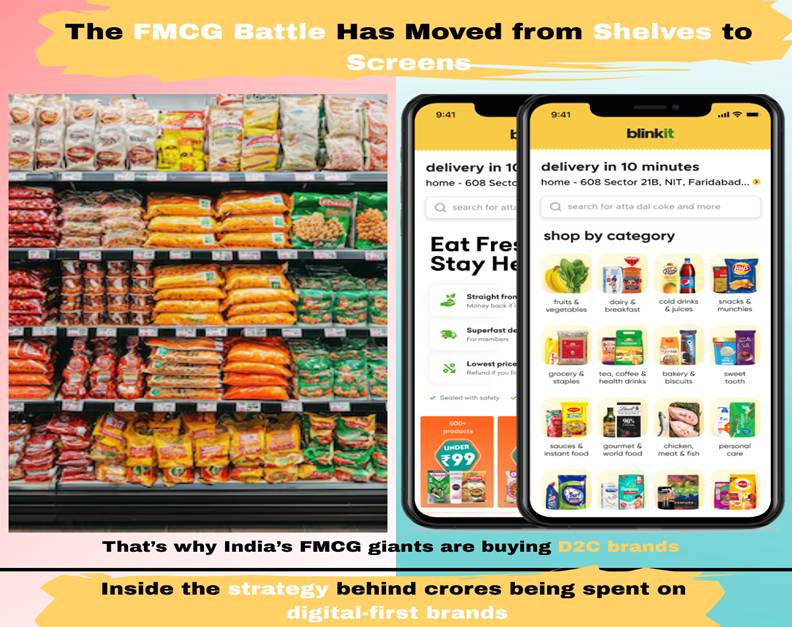
But today, the battlefield has shifted to smartphone screens. Consumers are increasingly discovering products through e-commerce and quick-commerce platforms like Blinkit and Zepto. On these apps, only a few products appear on the first screen, which makes visibility extremely valuable.
D2C brands understand this environment very well. They design packaging that stands out in small thumbnails, build strong online reviews, and create high repeat purchases. Many of them build their audience through social media long before entering retail stores.
For traditional FMCG companies that were built for offline distribution, adapting to this new “phone screen economy” can be difficult. Acquiring D2C brands helps them quickly gain a strong digital presence.
Trust-Driven Brands Are Winning
Another big reason behind these acquisitions is consumer trust.
In categories like clean beauty, nutrition, and wellness, consumers care deeply about ingredients, transparency, and authenticity. Many D2C brands have built strong communities by sharing their founder stories, explaining their product ingredients, and interacting directly with customers.
This kind of personal connection is often hard for large corporate brands to create. Consumers sometimes see big companies as distant and overly commercial. D2C brands, on the other hand, feel more relatable and trustworthy.
By acquiring these startups, FMCG giants are not just buying products—they are buying consumer trust and brand loyalty.
A Portfolio Strategy for Future Growth
Many legacy FMCG products are growing slowly today. To find the next big growth engine, companies are making multiple bets across emerging categories.
Instead of relying on a single new brand, they invest in several smaller ones—such as plant-based foods, healthy snacks, and natural skincare. The idea is similar to a venture capital strategy: some brands may fail, but a few could become massive success stories.
This approach allows large companies to stay relevant in fast-changing consumer markets.
The Real Challenge After Acquisition
However, acquiring a D2C brand is only the first step. The real challenge is scaling the brand without destroying what made it special.
D2C startups usually grow because they are fast, creative, and closely connected to their customers. Large corporations, on the other hand, operate with structured processes and corporate systems.
If a big company pushes too many changes too quickly, the brand may lose its authenticity and community trust. That’s why many acquisitions keep the original founders involved and scale the business gradually.
In the end, India’s FMCG giants are not just buying small startups—they are buying digital relevance, consumer trust, and the future of brand building.