
Cloud Gaming in India: The Future of Gaming Without Consoles
Gaming in India is undergoing a quiet revolution. While the world debates PlayStation vs. Xbox, millions of Indians are bypassing that conversation entirely jumping straight to a future where games live in the cloud, not under your TV.
Welcome to the era of cloud gaming, where the only hardware you need is the device already in your pocket.
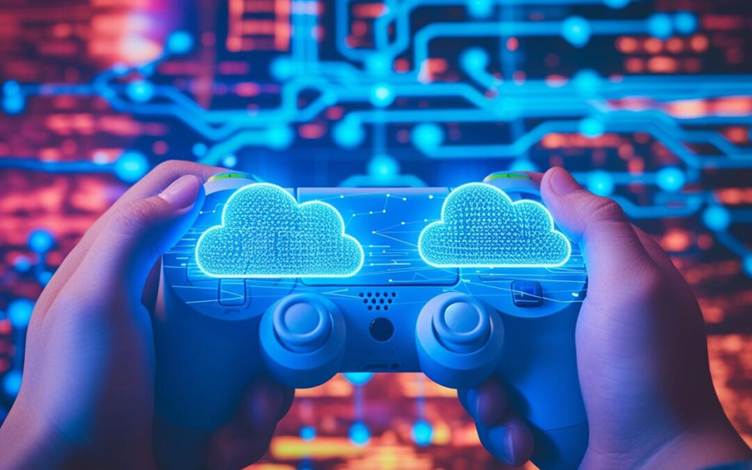
What Exactly Is Cloud Gaming?
Think of cloud gaming as the Netflix of video games. Just as Netflix streams movies to your screen without requiring DVDs or downloads, cloud gaming streams games directly from powerful remote servers to your device. You press a button on your phone or laptop, and the game responds instantly even though it’s running on a server hundreds of miles away.
No downloads. No installations. No expensive gaming rig collecting dust in the corner.
The game runs on high-end hardware in a data centre somewhere, and what you see on your screen is essentially a live video feed. Your controls get sent back to the server, and the magic happens fast enough that it feels like the game is running locally. All you need is a decent internet connection and a compatible device.
Why India Is the Perfect Proving Ground
India isn’t just another market for cloud gaming it might be the most important one. Several factors make it uniquely positioned for this shift.
Mobile-first mindset: With over 700 million smartphone users, India is already a mobile gaming powerhouse. People here are comfortable using phones as their primary gaming device, unlike markets where consoles and PCs dominate. Cloud gaming simply extends what’s already familiar: playing on the device you carry everywhere.
Price sensitivity: Here’s the hard truth: a PlayStation 5 costs around ₹50,000, and a decent gaming PC can easily run ₹80,000 or more. For most Indian gamers, that’s not an impulse purchase it’s a major financial decision. Cloud gaming subscription models, typically ranging from ₹200-1,000 per month, eliminate that barrier entirely. Suddenly, AAA titles become accessible to millions who were previously priced out.
Infrastructure improvements: India’s internet landscape has transformed dramatically. Jio’s 4G revolution made mobile data affordable and widespread, and 5G is now rolling out across major cities. Average broadband speeds have climbed steadily. While latency and bandwidth challenges remain, the infrastructure is improving at exactly the right pace for cloud gaming to take hold.
Leapfrogging opportunity: Just as India skipped landlines and went straight to mobile phones, cloud gaming offers a chance to leapfrog the traditional console generation altogether. Why invest in gaming hardware that’s obsolete in five years when you can stream the latest games on demand?
Gaming Without the Hardware Tax
The elimination of expensive hardware is cloud gaming’s most revolutionary promise. Consider what you’d traditionally need for modern gaming: a console or PC costing tens of thousands of rupees, regular hardware upgrades, physical storage space, and ongoing maintenance.
Cloud gaming removes all of it. That 2018 mid-range laptop? It can now run Cyberpunk 2077. Your smartphone? Suddenly capable of streaming console-quality titles. The aging desktop you use for work? It’s now a gaming machine after hours.
This democratization matters deeply in a market where disposable income varies widely. A student in tier-2 city can access the same games as someone with a high-end gaming setup in Mumbai or Bangalore. The playing field levels considerably when hardware stops being the gatekeeper.
Storage constraints also disappear. Modern games can consume 100GB or more of disk space. Cloud gaming means unlimited access to vast libraries without worrying about what to delete to make room for the next title.
The Players Building India’s Cloud Gaming Future
Several companies are making strategic bets on India’s cloud gaming potential, each taking slightly different approaches.
JioGamesCloud emerged as an early mover, leveraging Jio’s massive user base and telecommunications infrastructure. Launched in partnership with Microsoft Azure, the platform brings Xbox games to Indian mobile users. The integration with Jio’s ecosystem telecom services, JioFiber broadband, set-top boxes creates multiple access points. For Reliance, it’s not just about gaming; it’s about creating stickiness in their digital ecosystem.
Airtel partnered with Blacknut to tap into the cloud gaming wave, bundling access with certain broadband plans. This telco-plus-gaming model makes sense: better internet drives cloud gaming demand, and cloud gaming drives demand for better internet. Blacknut brings a catalog of 500+ games, offering variety without requiring users to purchase titles individually.
Nvidia’s GeForce NOW, while not directly available in India, reaches Indian gamers through partner platforms and VPN users. Nvidia’s approach differs: instead of a walled garden, GeForce NOW lets users stream games they already own on platforms like Steam or Epic Games Store. It’s appealing for gamers who’ve built libraries on PC but lack the hardware to run newer titles.
The space is still nascent, with more players likely to enter as infrastructure improves and the market proves itself.
The Road Ahead
Cloud gaming in India faces real challenges. Latency remains an issue, particularly for competitive multiplayer games where milliseconds matter. Internet penetration and quality vary wildly between urban and rural areas. Data caps and fair usage policies can limit extended gaming sessions.
But the trajectory is clear. As 5G expands, as data becomes cheaper, as more Indians experience console-quality gaming without console-level investment, adoption will accelerate. International giants like Xbox Cloud Gaming and PlayStation Plus Premium are watching the market closely. Regional players are experimenting with pricing and content.
The future of gaming in India might not look like the West’s past. It might skip entire hardware generations, creating a new model where accessibility trumps ownership, where libraries exist in the cloud rather than on shelves, where the device in your hand whatever it is becomes a window into any game ever made.
The console wars? India might just declare peace by making consoles optional.
The cloud gaming revolution won’t happen overnight, but for millions of aspiring gamers across India, the future just became a lot more affordable and a lot more accessible.