From Comfort Food to Culture Code: How Maggi Is Repositioning for Gen Z
For millions of Indians, Maggi is more than just noodles. It’s the 2 AM study session snack. It’s what your mom made when nothing else was ready. It’s the one dish every hostel student somehow mastered. For decades, Maggi built its entire brand on that warm, fuzzy feeling and it worked brilliantly.
But here’s the thing about nostalgia: it doesn’t travel well across generations.
Gen Z those born roughly between 1997 and 2012 didn’t grow up in the same India. They grew up with Instagram, skincare routines at 16, strong opinions about everything, and absolutely zero patience for being talked down to. They don’t just eat food; they use it to say something about who they are.
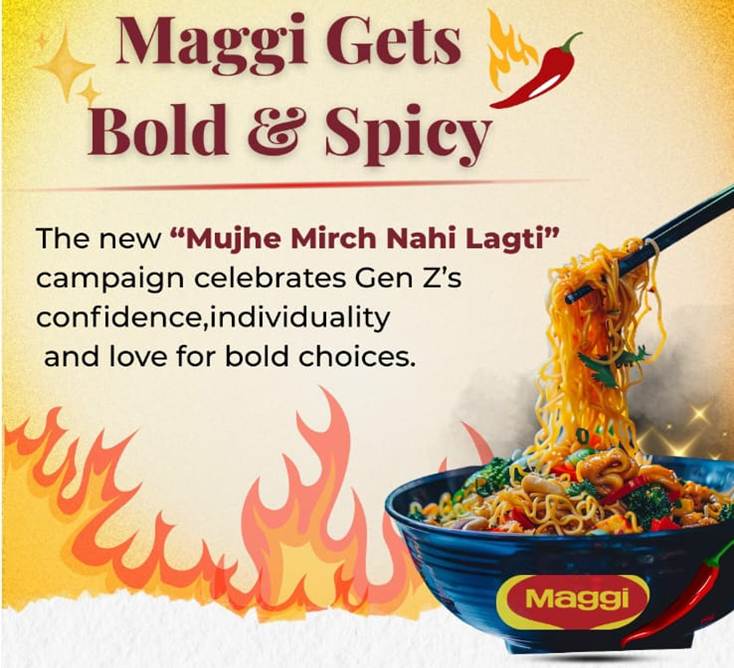
So, when Nestlé India rolled out the “Mujhe Mirch Nahi Lagti” (I don’t feel the heat/spice) campaign for Maggi’s Hot Heads variant, it wasn’t just a product launch. It was a signal Maggi is learning a new language.
What Changed, and Why It Had To
The old Maggi playbook was simple: remind people of good times, lean into the “Mummy ke haath ka Maggi” emotion, and let nostalgia do the selling. And for millennials and older consumers, it worked.
But Gen Z doesn’t respond to nostalgia the same way. They weren’t there for the original emotional memory. Selling them on “remember when?” is like showing someone a photo album of people they’ve never met.
What does resonate with Gen Z? Identity. Confidence. Being unapologetically themselves.
“Mujhe Mirch Nahi Lagti” taps directly into that. The phrase itself is a flex a casual, almost cocky declaration that you can handle what others can’t. It’s the kind of thing you’d say while raising an eyebrow and reaching for a second helping that had everyone else sweating. It’s cool. It’s Gen Z.
The Shift: From Emotion to Expression
Traditional food marketing speaks to how a product makes you feel. The new marketing asks: what does this product say about you?
This is what marketers call emotional repositioning and it’s one of the trickier moves a legacy brand can make. You’re not abandoning your old audience. You’re expanding your emotional territory.
Maggi has moved from “comfort” (passive, warm, nostalgic) to “confidence” (active, bold, self-expressive). The product is no longer just something you eat it’s something you claim. Eating the spiciest Maggi and being unbothered? That’s a personality trait for Gen Z.
Why This Strategy Works
A few things make this repositioning smart rather than just trendy.
First, it’s rooted in a real product truth. Hot Heads is actually spicy. The campaign doesn’t lie or exaggerate it simply frames the experience through a Gen Z lens. That authenticity matters enormously to this generation, which can smell a marketing stunt from miles away.
Second, it’s social-media native. “Mujhe Mirch Nahi Lagti” is the kind of phrase that becomes a caption, a reel hook, a casual flex in a WhatsApp group. It’s short, punchy, and culturally portable exactly what you need in an era where the platform is the marketing.
Third, it doesn’t alienate the existing base. Maggi hasn’t burned down its nostalgia equity. It’s simply added a new room to the house one where younger consumer feels like they belong.
The Bigger Picture
What Maggi is doing is part of a larger pattern we’re seeing across legacy FMCG brands in India. As Gen Z becomes a dominant consumer segment, brands built on emotional memory need to find new emotional hooks ones that speak to self-identity, cultural confidence, and digital fluency.
It’s not enough to be loved. You have to be relevant.
Maggi’s bet is that the same noodle that comforted millennials can become a badge of boldness for Gen Z. “Mujhe Mirch Nahi Lagti” is just three words but they carry the weight of a brand deciding to grow up without letting go.
And honestly? That’s a pretty bold move in itself.